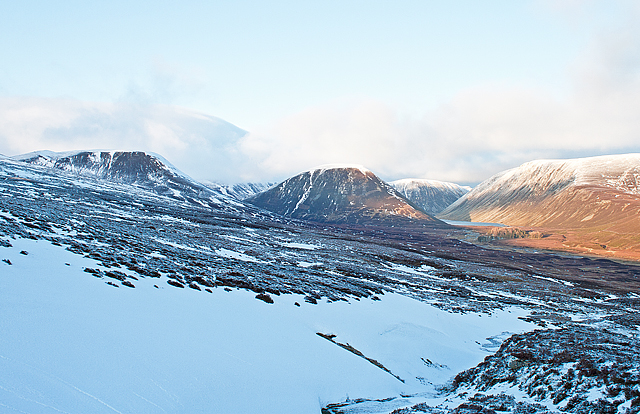
What has been achieved
Durrell reported in November 2026 that 365 hectares of degraded peatland had been restored. The work tackles historic drainage and erosion so that wet peat can recover. Surveys conducted in 2025 and 2026 recorded 17,828 naturally regenerating young trees across the estate, while fieldworkers identified more than 3,500 montane willows, an uncommon upland species. Wildlife surveys have documented more than 1,000 plant and animal species, including 540 insect species, the azure hawker dragonfly and black alpine-sedge, which had not been recorded locally since the 1980s.
How restoration works
The programme combines peatland rewetting and erosion repairs with management of deer grazing, allowing birch, aspen, willow and other native woodland to establish naturally. In 2025 Durrell began a major peatland phase designed to repair 36 hectares of eroded peat and reverse 23 kilometres of drainage channels; these were the scope of that phase, not an additional completed area to add to the latest 365-hectare total.
The Cairngorms National Park Authority's 2026 procurement documents describe a separate eastern-estate works package: 51 hectares scheduled for treatment in 2026, 53 hectares designed for 2027, and up to approximately 139 hectares considered for 2028 subject to design and finance. Its estimated tender value was £750,000, not a published total budget for the century-long estate programme.
What comes next
Durrell has identified a further 2,200 hectares of damaged peatland for future work. It also plans restoration of sections of the River Edendon Water, improving riverside habitats and reconnecting the watercourse with its natural floodplain. Seed collection, nursery work and locally sourced native-tree establishment will supplement natural regeneration, alongside continuing habitat surveys and opportunities for local conservation training.
Milestones
2023 — Durrell takes on the estate under a 100-year lease.
2025 — First major peatland-restoration phase begins; ecological surveys and deer-management work continue.
2025–26 — Surveys record 17,828 young naturally regenerating trees; November 2026 reporting identifies 365 hectares of peatland restored.
2027–28 — Further mapped eastern-estate peatland works and river-restoration planning, subject to funding, surveys and consents.
Map information
The project covers a large area of Glen Edendon and surrounding upland peatland. The pin is an approximate estate landscape point in the upper Edendon valley (56.8618, −4.1256), derived from the midpoint of OS grid square NN7076. It does not mark the restored 365-hectare area. [6][7]
Latest developments
Conservationists have restored 365 hectares of damaged peatland at Dalnacardoch in the Cairngorms National Park, three years into a 100-year programme to revive a 7,500-hectare Highland landscape.
The Durrell Wildlife Conservation Trust, which took on the estate in 2023, is blocking historic drainage channels, repairing eroded peat and managing grazing pressure to give native woodland room to return. Surveys in 2025 and 2026 recorded 17,828 naturally regenerating young trees and more than 3,500 rare montane willows. Researchers have also identified over 1,000 species of plants and animals, including 540 insect species.
A further 2,200 hectares of peatland have been identified for future restoration, while planned work on the River Edendon Water aims to improve freshwater habitats and reconnect parts of the river with its natural floodplain.